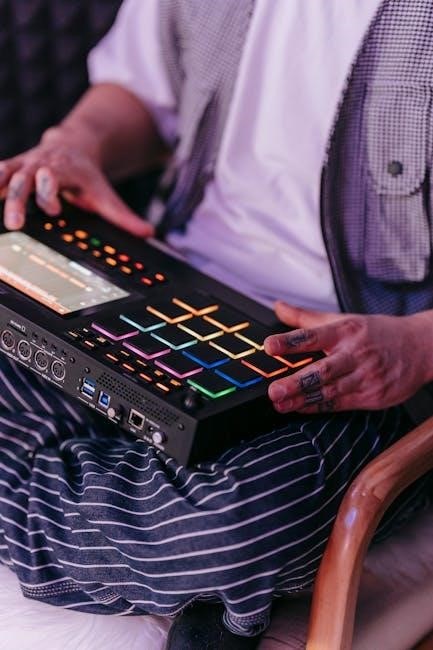
The Akai MPC One represents a powerful, standalone sampling and sequencing hub, offering musicians a streamlined workflow and intuitive experience.
Accessing the user guide is crucial; it’s often found alongside the desktop software, eliminating the need for extensive online searches for essential information.
This versatile instrument boasts a 7-inch multi-touch display, MIDI connectivity, and 2GB of user storage, making it a complete production solution for modern beatmakers.
The MPC Bible 3 provides a comprehensive, hands-on tutorial course specifically designed for standalone MPCs running the MPC3 firmware, enhancing user proficiency.
What is the MPC One?
The Akai MPC One is a standalone sampler, sequencer, and drum machine, representing a condensed version of Akai’s flagship MPC X. It’s designed to provide producers with a complete music production environment without requiring a computer connection, though it can integrate with desktop software.
Essentially, it’s a self-contained studio, offering sampling, sequencing, beatmaking, and performance capabilities all within a single unit. The user manual, often bundled with the desktop software, details its extensive features. Finding this manual is key, as some users have reported difficulty locating it directly on the product page.
The MPC One’s core functionality revolves around its ability to manipulate audio samples, create rhythmic patterns, and arrange these elements into complete songs. It’s a powerful tool for hip-hop, electronic music, and various other genres, and resources like the MPC Bible 3 offer in-depth tutorials for mastering its capabilities.
It’s a modern evolution of the iconic MPC workflow, accessible to both seasoned professionals and aspiring beatmakers.
Key Features and Specifications
The Akai MPC One boasts a compelling array of features, starting with its vibrant 7-inch multi-touch display, providing an intuitive interface for sample manipulation and sequencing. It includes 2GB of internal storage for samples and projects, expandable via external drives.
Connectivity options are robust, featuring MIDI input/output for integrating with other hardware synths and controllers. The unit runs on the MPC3 firmware, offering a powerful and flexible production environment. The user manual comprehensively details these specifications and functionalities.
Key features include real-time sampling, time-stretch and pitch-shift capabilities, and a comprehensive suite of effects. The MPC Bible 3 further expands on these features, offering advanced techniques and workflows. Understanding these specifications, as outlined in the documentation, is crucial for maximizing the MPC One’s potential.
Its standalone operation and compact design make it ideal for both studio and on-the-go production.

Getting Started with Your MPC One
Begin your journey by referencing the included manual, often installed with the desktop software, for seamless unboxing and initial setup guidance.
Familiarize yourself with the user guide to quickly power on and configure your MPC One for optimal performance and creative exploration.
Unboxing and Setup
Upon receiving your Akai MPC One, carefully unpack the box and verify all included components are present; The standard user manual, a vital resource, is typically installed alongside the accompanying desktop software – eliminating the need for immediate online searches.

Before connecting any cables, take a moment to visually inspect the unit for any signs of shipping damage. Ensure you have the MPC One itself, the power adapter, and any included documentation.
Position the MPC One on a stable, level surface with adequate ventilation. Connect the power adapter to the unit and a suitable power outlet. Avoid placing the MPC One near sources of excessive heat or moisture.
Refer to the user guide for detailed instructions on connecting external storage devices, MIDI controllers, or audio interfaces. Proper setup is crucial for a smooth and efficient workflow, allowing you to immediately begin exploring the MPC One’s capabilities.
Powering On and Initial Configuration
To power on your Akai MPC One, locate the power button – typically found on the rear panel – and press it firmly. The unit will initiate its startup sequence, displaying the Akai logo on the touchscreen.
Upon initial boot, the MPC One will guide you through a basic configuration process. This includes selecting your preferred language, date, and time settings. The user manual, installed with the desktop software, provides detailed steps for this process.
You’ll also be prompted to format the internal storage. This is recommended for optimal performance. Ensure you understand the implications of formatting, as it will erase any existing data.
Finally, connect to a network for firmware updates and access to online resources. Regularly updating your MPC One ensures you have the latest features and bug fixes, enhancing your overall production experience.
Navigating the MPC One Interface
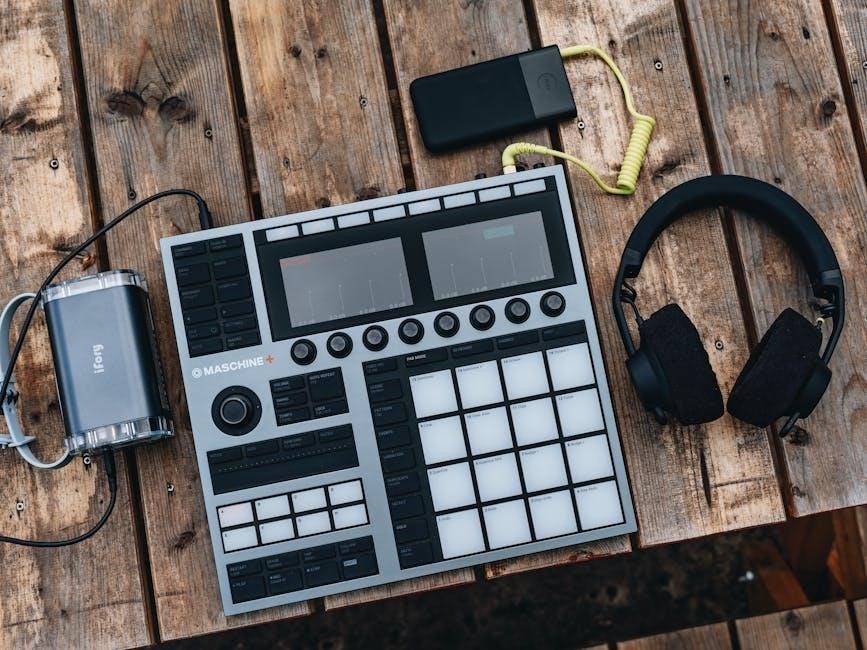
The MPC One’s interface centers around its responsive 7-inch multi-touch display. Familiarize yourself with the main sections: the Browser, the 16 Pads, the Mixer, the Sequencer, and the Program/Project views.
Utilize the touchscreen for direct manipulation of parameters, sample slicing, and pattern creation. The manual, accessible through the desktop software, details each function and its corresponding controls.
Knobs and faders provide tactile control over essential parameters like volume, pan, and effects. The ‘Shift’ button unlocks secondary functions on many controls, expanding the MPC One’s capabilities.

Mastering the menu system is key. Explore the settings to customize the interface to your workflow; Regularly referencing the user guide will accelerate your understanding and unlock the full potential of this powerful instrument.
Understanding the Core Functions
The MPC One excels at sampling, sequencing, and program creation, offering a complete music production environment. The manual details these core functions, ensuring efficient workflow.
Explore audio importing, beatmaking, and project management for a comprehensive understanding of the MPC One’s capabilities.
Sampling and Importing Audio
The Akai MPC One’s sampling capabilities are central to its workflow, allowing users to capture and manipulate audio directly within the unit. The official user guide provides detailed instructions on various sampling methods, including recording directly from external sources via the built-in audio inputs.
Importing audio is equally straightforward, supporting a range of file formats. The manual explains how to transfer files to the MPC One using USB storage devices, detailing the proper file management procedures for optimal organization. Users can easily load samples into dedicated memory locations, preparing them for sequencing and manipulation.
Furthermore, the guide covers techniques for trimming, looping, and time-stretching samples, enabling creative sound design possibilities. Understanding these core functions, as outlined in the manual, is crucial for maximizing the MPC One’s sampling potential and crafting unique musical textures.
Sequencing and Beatmaking
The MPC One excels in sequencing and beatmaking, offering a powerful and intuitive environment for crafting rhythmic foundations. The user manual thoroughly explains the various sequencing modes, including step sequencing and real-time recording, empowering users to build complex patterns with ease.
Detailed instructions are provided on utilizing the MPC One’s pads for triggering samples and creating drum patterns. The manual also covers advanced techniques like velocity sensitivity adjustment and swing application, allowing for nuanced and expressive performances. Understanding these features, as detailed in the guide, unlocks the full potential of the MPC One’s sequencing engine.
Furthermore, the guide illustrates how to arrange sequences into complete songs, utilizing the MPC One’s project structure for efficient workflow and organization. Mastering these sequencing capabilities is key to producing professional-quality beats.
Working with Programs and Projects
The MPC One’s program and project structure is central to its workflow, and the user manual provides comprehensive guidance on managing these elements effectively. Programs encapsulate all the sounds, sequences, and settings for a specific musical idea, allowing for quick recall and modification.
The manual details how to create, save, and load programs, ensuring users can easily organize their sounds and ideas. Projects, on the other hand, represent complete songs or compositions, containing multiple programs arranged in a specific order. The guide explains how to build a project timeline and arrange programs to create a full track.
Understanding the distinction between programs and projects, as outlined in the manual, is crucial for efficient music production. It also covers file management within projects, ensuring seamless organization and accessibility.
Advanced Features and Techniques
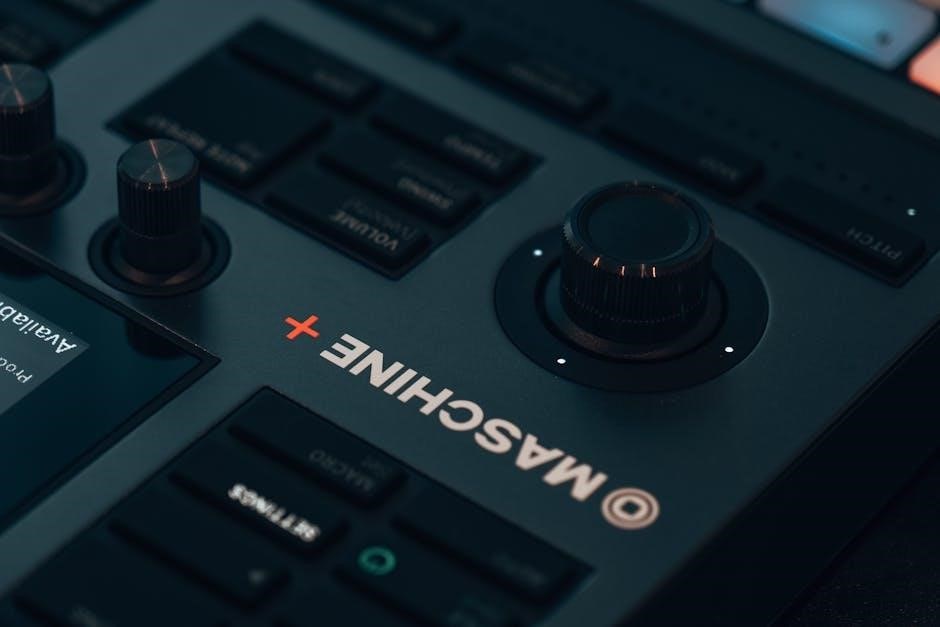
The MPC One manual unlocks deeper functionality, detailing effects utilization, MIDI integration for external control, and maximizing the touchscreen’s potential for nuanced workflows.
Using the MPC One’s Effects
The Akai MPC One provides a robust suite of built-in effects, and mastering their application is key to elevating your productions. The MPC One manual serves as an invaluable resource, detailing each effect’s parameters and functionalities.
Explore a diverse range of options, from classic reverbs and delays to dynamic compressors and creative modulation effects. Learn how to strategically insert effects within your programs to sculpt sounds, add depth, and create unique textures.

The manual guides you through utilizing effect chains, allowing for complex processing and layered sonic manipulation. Discover techniques for automating effect parameters to introduce movement and variation within your sequences. Experiment with different routing configurations to achieve specific sonic results.
Understanding the nuances of each effect, as outlined in the manual, empowers you to transform raw samples into polished, professional-sounding elements, ultimately enhancing the overall impact of your music.
MIDI Integration and Control
The Akai MPC One excels as a central hub for MIDI control, seamlessly integrating with external keyboards, controllers, and other MIDI-enabled devices. The MPC One manual comprehensively details the MIDI implementation, covering input/output configurations and control surface mapping.
Learn how to assign MIDI controllers to various MPC One parameters, enabling hands-on control over sounds, sequences, and effects. Explore the possibilities of using external keyboards to play virtual instruments loaded within the MPC One.
The manual guides you through configuring MIDI channels, program change messages, and control change assignments, allowing for customized control schemes. Discover how to synchronize the MPC One with other MIDI devices for seamless collaboration and performance.
Mastering MIDI integration unlocks a world of creative possibilities, expanding the MPC One’s functionality and streamlining your workflow for a truly personalized music production experience.
Utilizing the Touchscreen Effectively
The Akai MPC One’s 7-inch multi-touch display is central to its intuitive workflow, and the MPC One manual provides detailed guidance on maximizing its potential. Learn to navigate the interface with ease, utilizing gestures like swipes, taps, and pinches for efficient control.
The manual explains how to access various menus, adjust parameters, and manipulate samples directly on the touchscreen. Discover advanced techniques like using multi-touch for simultaneous parameter adjustments and zooming into waveforms for precise editing.
Explore the customizable touchscreen layouts, allowing you to tailor the interface to your specific workflow. Understand how to utilize the touchscreen for real-time performance, triggering samples and effects with intuitive gestures.
Mastering the touchscreen unlocks the full power of the MPC One, providing a tactile and responsive experience for music creation and performance.

Expanding Your MPC One’s Capabilities
The MPC One manual details utilizing external storage for expanded file management, alongside instructions for crucial firmware and software updates to unlock new features.
External Storage and File Management
The Akai MPC One offers expanded storage options beyond its internal 2GB, crucial for larger sample libraries and projects. The user manual details connecting USB drives directly to the MPC One, enabling seamless file transfer and backup.
Effective file management is paramount; the manual guides users through organizing samples, programs, and projects within the MPC One’s file system. Understanding the directory structure is key to quickly locating and utilizing your sounds.
Furthermore, the manual explains how to import and export files between the MPC One and a computer, facilitating collaboration and archiving. Regularly backing up your data to an external drive is strongly recommended to prevent data loss, ensuring your creative work remains safe and accessible. The manual provides step-by-step instructions for this vital process.
Updating Firmware and Software
The Akai MPC One relies on regular firmware and software updates to maintain optimal performance and unlock new features. The user manual provides detailed instructions on how to update your unit, typically involving downloading the latest files from the Akai Professional website.
It’s crucial to follow the outlined procedures precisely during the update process to avoid potential issues. The manual emphasizes the importance of a stable power supply during updates, preventing interruptions that could corrupt the firmware.
Furthermore, the manual explains how to utilize the MPC Manager software on your computer to facilitate the update process. Staying current with updates ensures compatibility, bug fixes, and access to the latest enhancements, maximizing your MPC One’s capabilities and creative potential. Always refer to the manual for the most accurate and up-to-date instructions.

Troubleshooting Common Issues
The MPC One manual offers solutions for audio problems, performance glitches, and data recovery, including factory resets.
Consulting the guide ensures effective resolution of typical issues encountered during operation and maximizes your workflow.
Addressing Audio Problems
The Akai MPC One manual is your first resource when encountering audio difficulties. Begin by verifying all cable connections, ensuring secure links to speakers, headphones, and external audio interfaces.
Check the master volume and individual track levels within the MPC One’s interface, confirming they aren’t muted or set too low. Investigate potential sample rate mismatches between your audio files and the MPC One’s project settings – inconsistencies can cause distortion or silence.
If using external devices, confirm their drivers are up-to-date and properly configured. The manual details troubleshooting steps for common MIDI and audio synchronization issues. Explore the effects section, as improperly configured effects can sometimes introduce unwanted noise or signal loss. Finally, a factory reset, as outlined in the manual, can resolve deeply embedded software conflicts causing audio anomalies.
Resolving Performance Issues
The Akai MPC One manual offers guidance for optimizing performance. If experiencing lag or freezing, start by reducing the number of active tracks and complex effects within your project. Excessive polyphony and demanding plugins strain the processor.
Ensure sufficient free storage space on the internal drive or connected external storage; a full drive significantly impacts performance. Regularly defragmenting the storage can also improve responsiveness. The manual details how to manage samples efficiently, suggesting sample rate reduction if necessary.
Updating to the latest firmware, as described in the manual, often includes performance enhancements and bug fixes. Consider increasing the buffer size in the MPC One’s settings, though this introduces latency. A factory reset, detailed in the manual, can eliminate software conflicts hindering optimal operation.
Factory Reset and Data Backup
The Akai MPC One manual strongly emphasizes regular data backups. Before performing a factory reset, which returns the MPC One to its original settings, backing up your projects, samples, and settings is crucial to prevent data loss.
The manual details multiple backup methods, including transferring data to a computer via USB or utilizing external storage devices. A factory reset can resolve persistent software issues, but it erases all user data. The process is clearly outlined in the manual, with step-by-step instructions.

Always verify the backup’s integrity before initiating the reset. Following a reset, you can restore your data from the backup, effectively returning the MPC One to its previous state. Refer to the manual for detailed restoration procedures and troubleshooting tips.